


Curiosities of Pilgrimage
In Lithuania, spiritual journeys can be enriched by hidden sites and experiences rooted in sincere faith and time-honored traditions. Imagine a cross resting at the bottom of a lake, or a wooden church built without a single nail. Discover traces of pagan rituals hidden in traditional annual celebrations.
There is so much to explore here – places and stories that lie beyond the official religious tourism routes, waiting to be uncovered.
Lithuania – The Land of Crosses
The symbolism of the cross in Lithuania is deeply important, reflecting both the power of faith and the resilience of the nation. One need only think of the world-famous Hill of Crosses, where thousands of crosses have been placed by people, or glance at the wooden roadside crosses and chapel-posts that dot the countryside. Across the country, there are also surprising and unexpected stories behind these crosses.
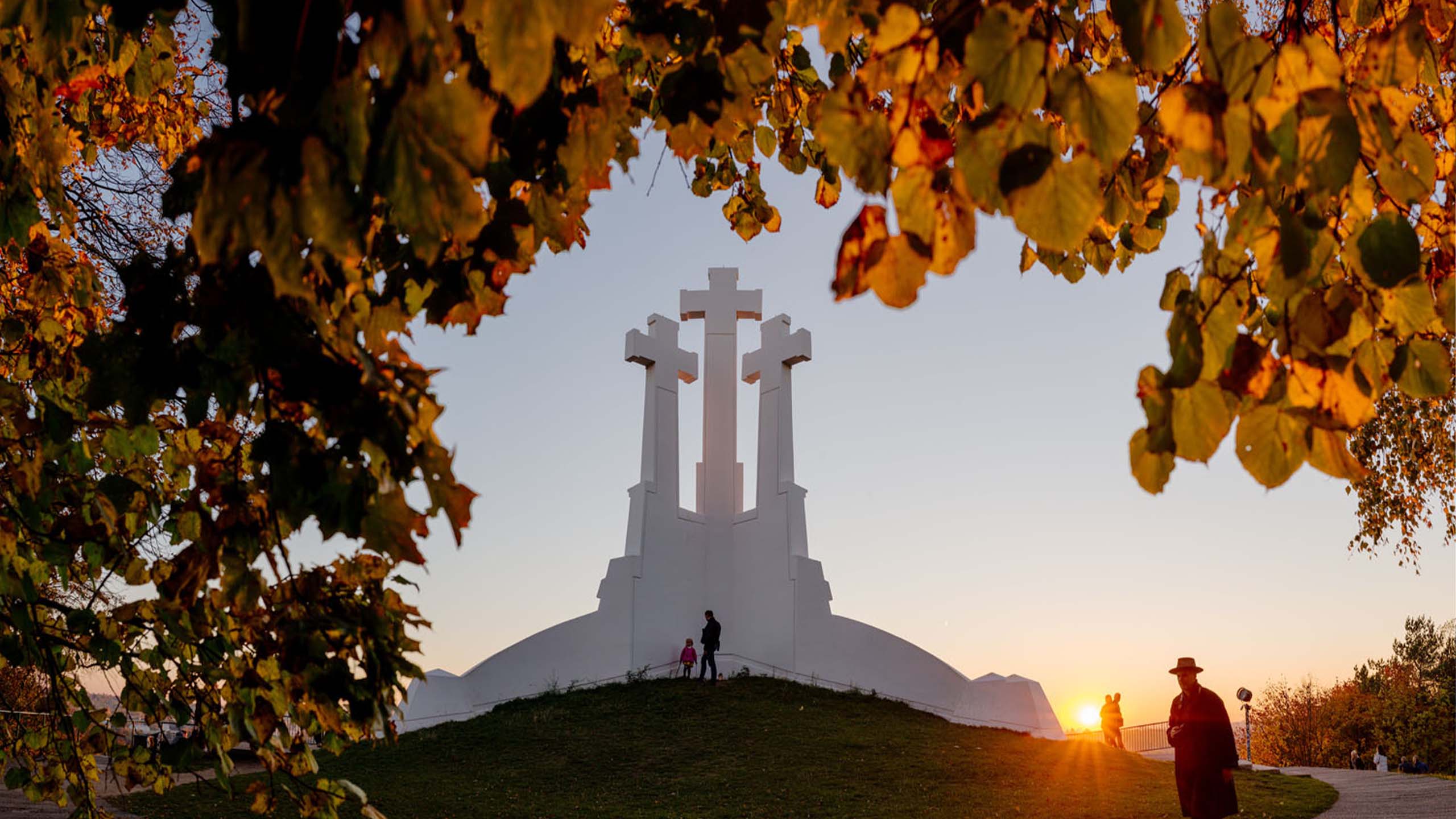
The Hill of Three Crosses
The hill above Vilnius, crowned by the Three Crosses, has become a symbol of Lithuanian identity. The 12-meter-tall monument can be admired from afar or up close – climbing the hill rewards visitors with panoramic views of the Old Town.
The memorial commemorates the death of Christian missionaries, Franciscan monks, who were martyred here during the pagan era. Wooden crosses were originally erected on this hill in their memory, and later the renowned architect Antanas Vivulskis designed the concrete version. The original memorial was destroyed by the Soviets in 1950 and rebuilt just before Lithuania regained its independence.
The hill is a favorite spot for photographers, history enthusiasts, and anyone seeking a contemplative walk above the city.
More information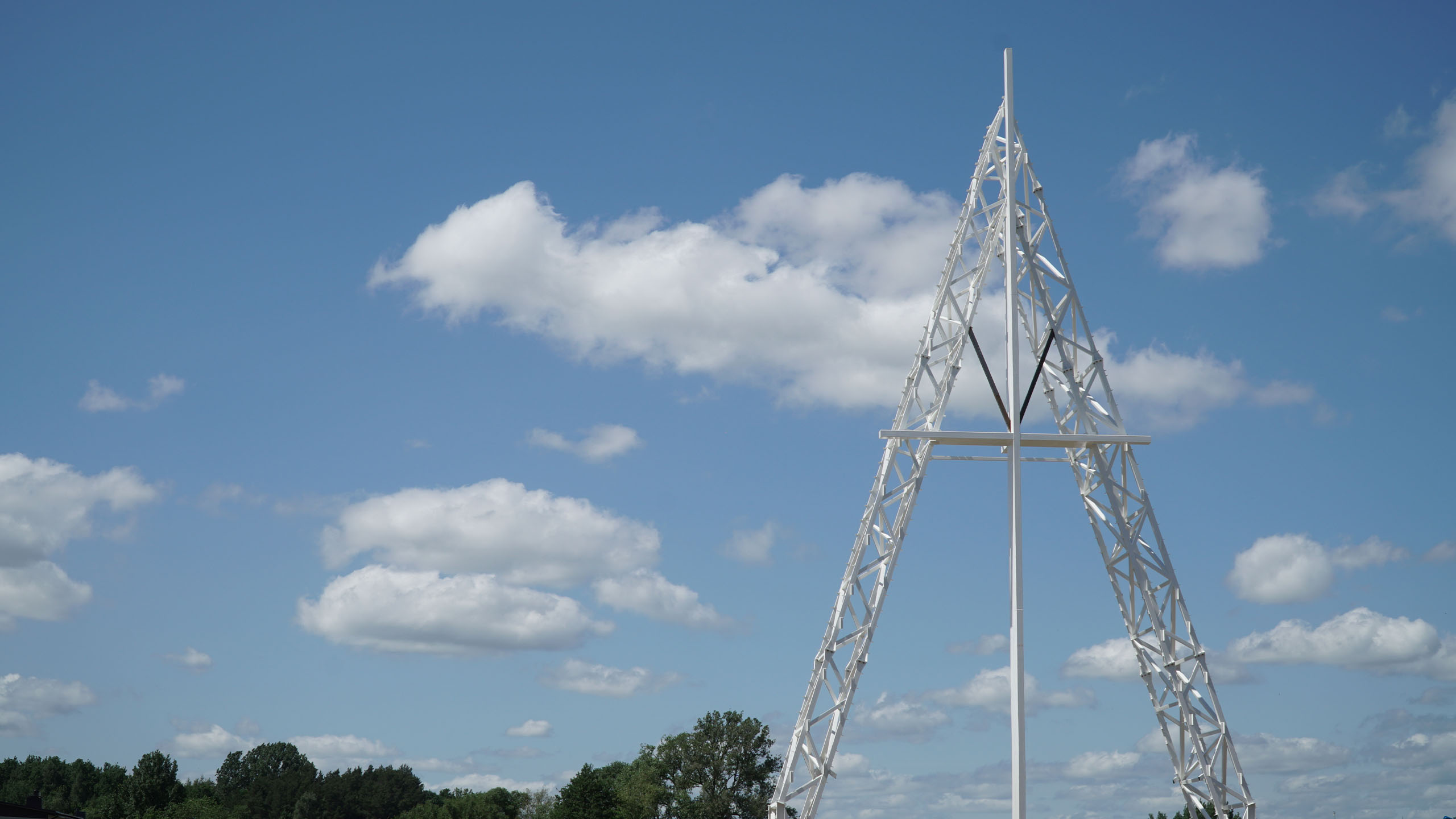
The Tallest Cross in Lithuania
The 33-meter-tall cross at Kaunas St. John Paul II Church is considered the tallest in the country. It stands only a few meters shorter than the famous Christ the Redeemer statue in Rio de Janeiro, Brazil.
The height of the cross symbolically reflects the age of Christ. It is dedicated to the memory of Lithuania’s fighters for independence.
Among other tall crosses in the country is the 20-meter-high Cross of the Nation’s Resurrection in the Spirituality Park (Dvasingumo Parkas) in Šilalė District, which features a Calvary commemorating deportees.
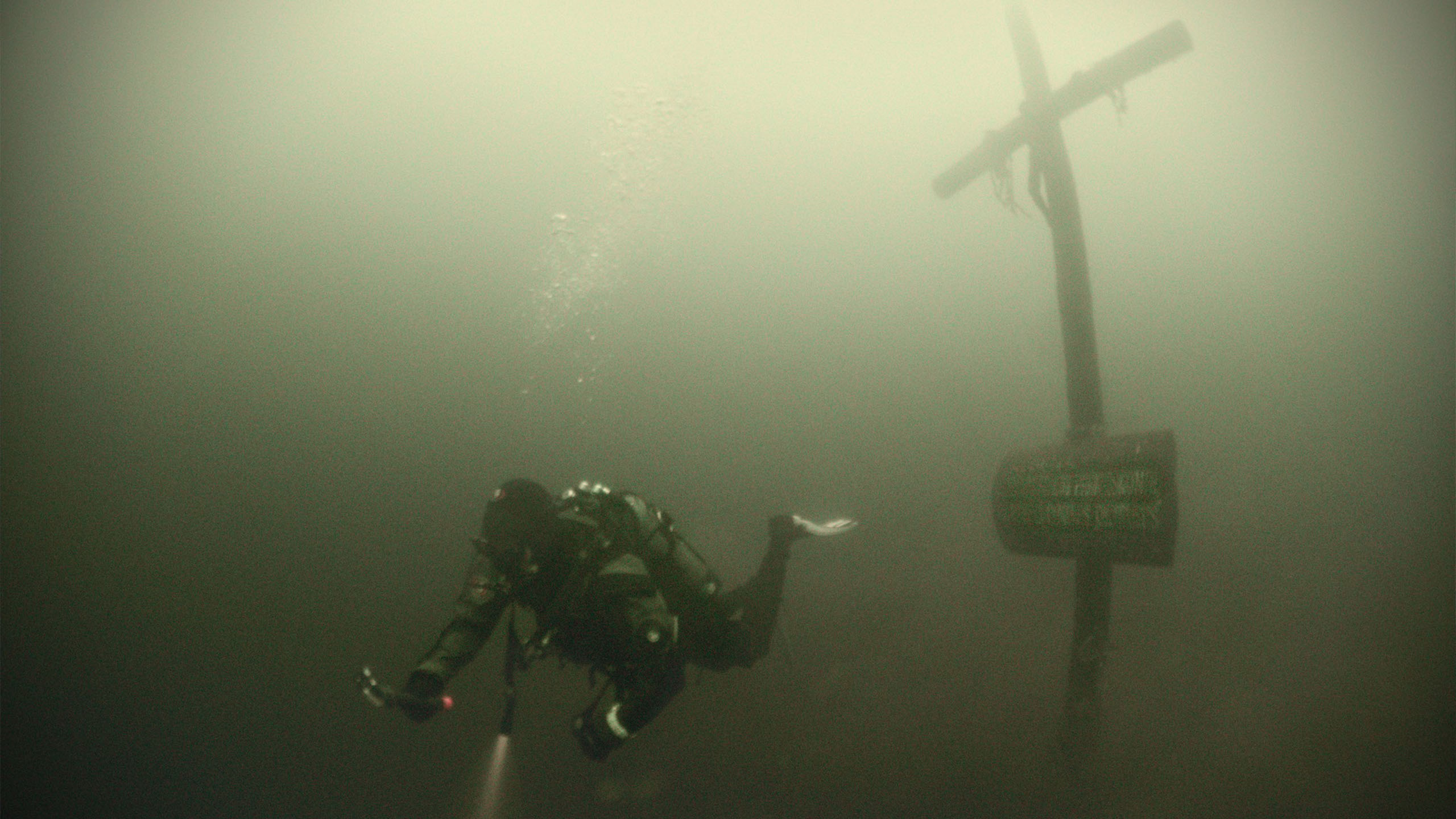
The Cross at the Bottom of the Lake
In Lake Plateliai, the largest and deepest lake in the Samogitia region, visitors can find not only the remains of a 15th-century bridge, a sunken yacht, and the mystical Virgin of the Depths sculpture, but also an underwater cross.
In the middle of the lake, on the so-called Kryžavonė Hill, a cross blessed by the Franciscan monks of Kretinga stands several meters below the water’s surface. It can be viewed by taking one of the routes offered by the local diving center Oktopusas.
According to the Franciscan brothers who lowered the 4-meter-tall cross underwater in 2005, this act was a direct interpretation of Pope John Paul II’s words – that to truly understand the essence of the cross, one must venture into the depths.
More information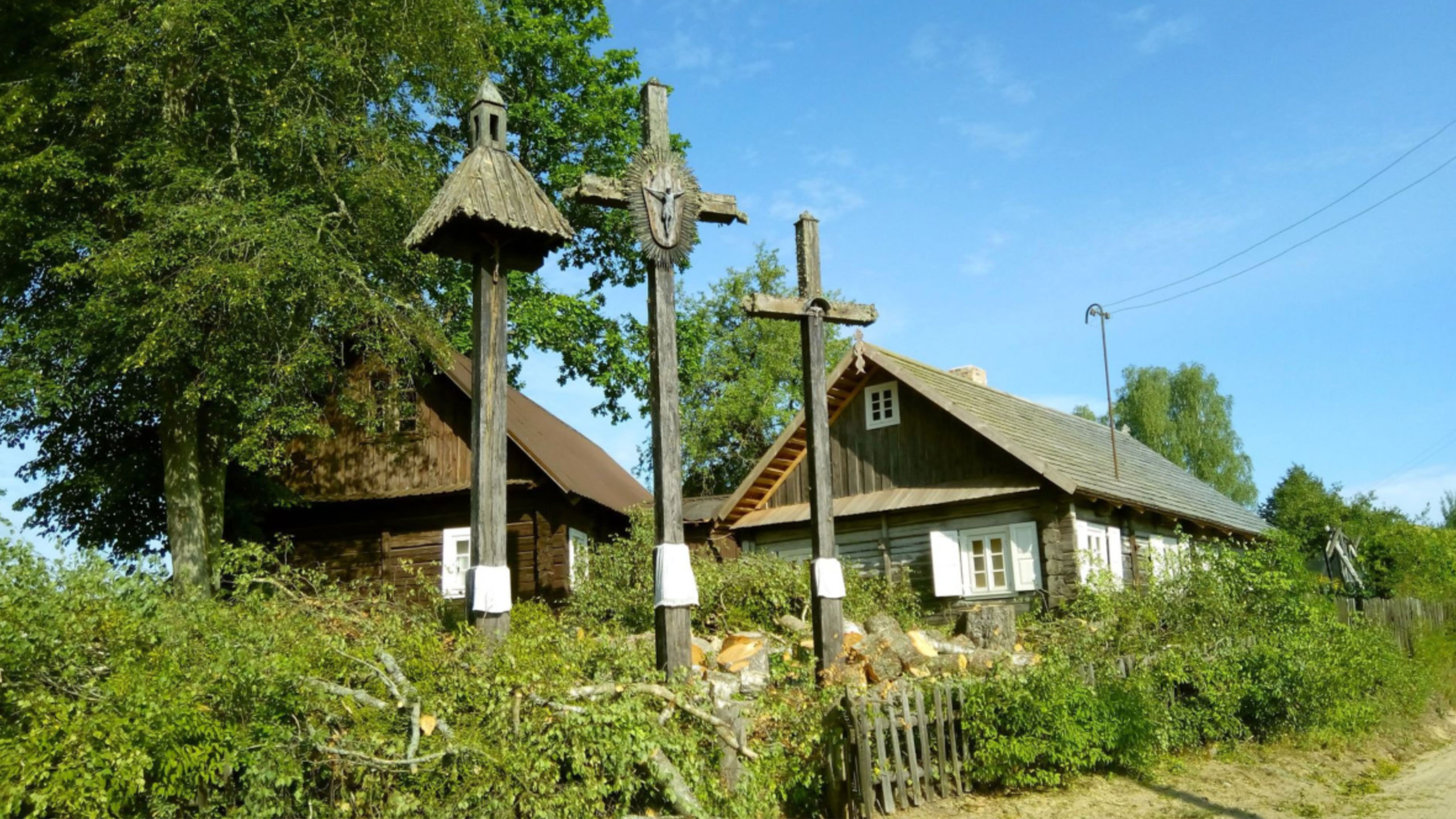
Crosses with Aprons
It is no wonder that Lithuania’s cross-crafting tradition is protected by UNESCO. Wooden crosses created by folk artists can be found throughout the country, but only in Dzūkija you can witness the unique tradition of decorating crosses with aprons.
Dzūkija, a region in southeastern Lithuania, is famous not only for its mushroom and berry-rich forests, sandy hills, lakes, and swamps, but also for its preserved ethnographic villages with centuries-old homesteads. In villages such as Margionys, Zervynos, Musteika, and Marcinkonys, it is customary to adorn wooden crosses with aprons before major holidays (Christmas, Easter, Assumption Day, etc.) or important life events. These decorated crosses symbolize prayers for grace, expressions of gratitude, or seeking forgiveness.
More informationStories of Wooden Churches
Lithuania’s religious tourism landscape would be incomplete without its sacred wooden architecture. Across the country, 265 wooden churches have survived, inviting visitors to discover a unique cultural heritage and a special relationship between believers and God.
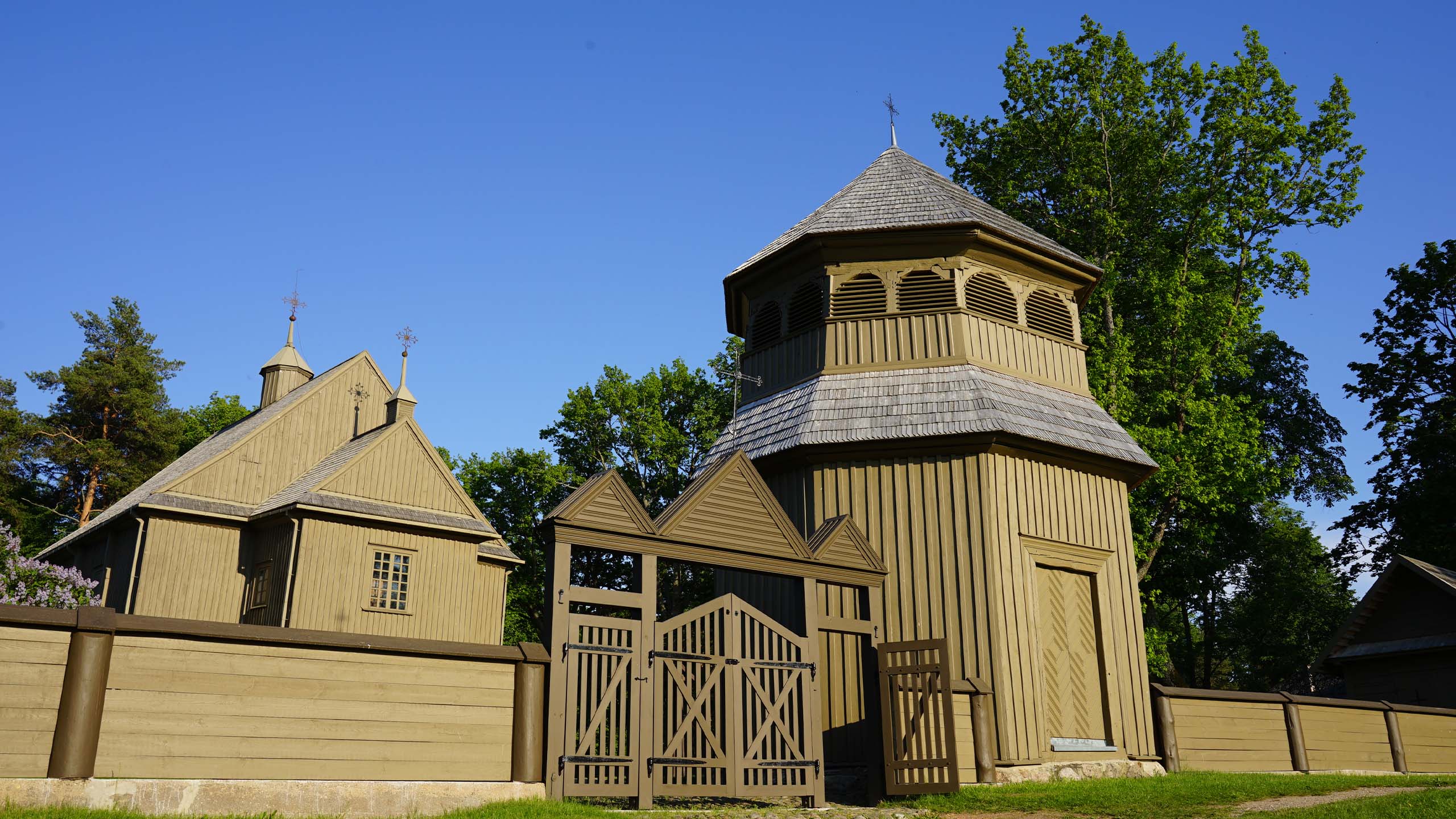
The Church Built Without Nails
Wooden St. Joseph’s Church of Palūšė is notable for having been built without nails, using only an axe and wooden pegs. Erected in the 18th century, it is an example of folk wooden Baroque.
All who enter the church, which stands on a hill by Lake Lūšiai, are greeted by an inscription above the door: “Enter good. Leave better.” The octagonal bell tower beside the church, resembling the watchtowers of ancient Lithuanian wooden castles, is the only one of its kind in Lithuania. Each August, St. Lawrence’s indulgence feast is celebrated at St. Joseph’s Church in Palūšė.
More information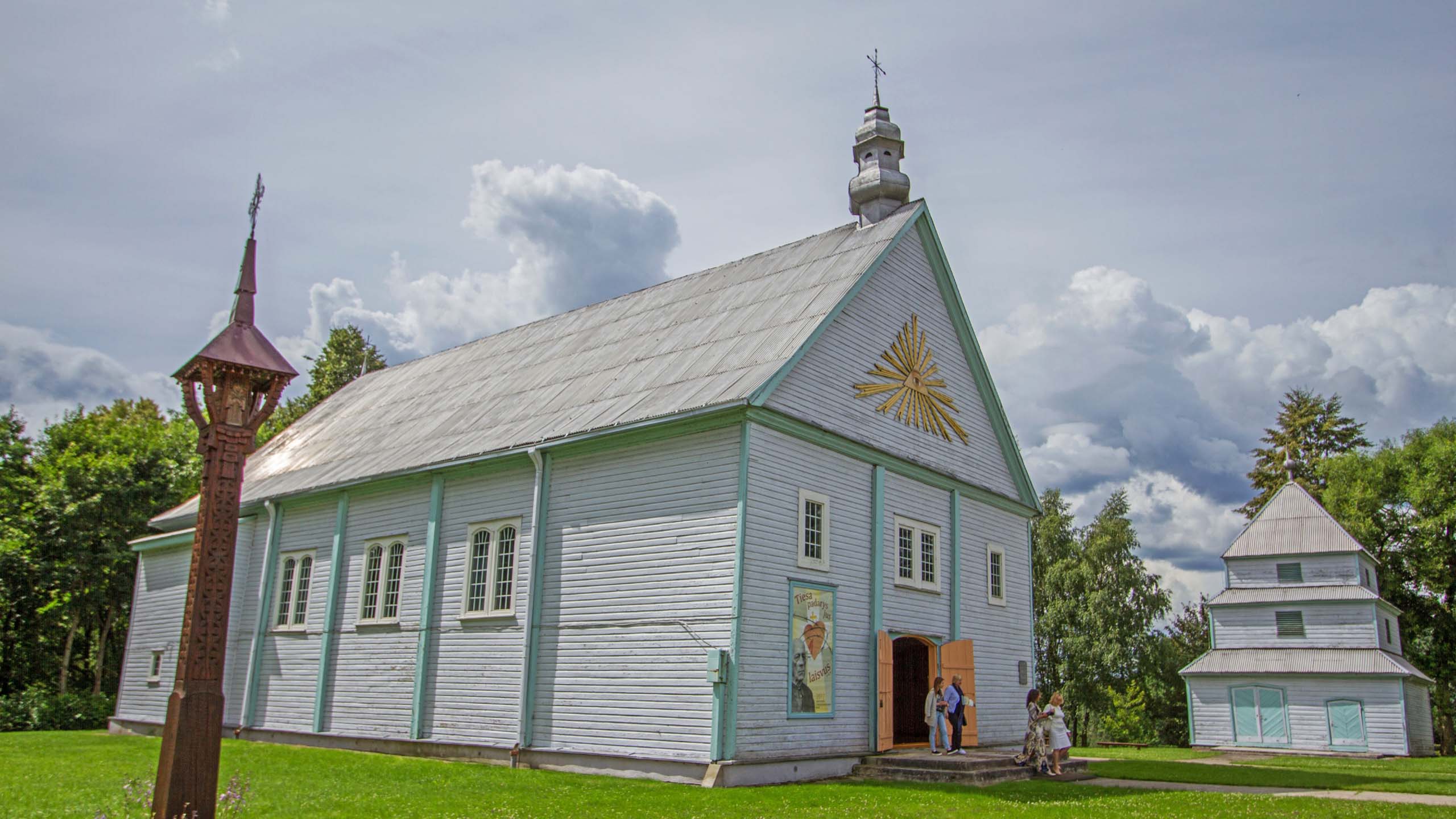
The Church from the Depths of the Lagoon
This gently blue-painted wooden St. Michael the Archangel Church in Rumšiškės could be described as having risen from the depths of the lagoon.
Originally built in a different location in the 19th century, the church stood there until 1959, when the area was flooded during the construction of the Kaunas Hydroelectric Power Plant. As the Nemunas River flooded village homesteads, the church was relocated to its present site.
The displaced residents, known as dugniečiai – people whose homes were left beneath the water, were forced to leave their homes. When Lithuania’s largest river was dammed, more than 700 homesteads, forests, and hillforts were left beneath the waters of the Kaunas Reservoir, earning it the name “the Lithuanian Atlantis.” The church and its bell tower were dismantled and transported to the upper terrace of the Nemunas.
Remarkably, the interior of this church, shaped by such an extraordinary fate, features not only unique examples of folk decoration but also pagan symbols, including signs associated with the ancient cult of the grass snake.
More information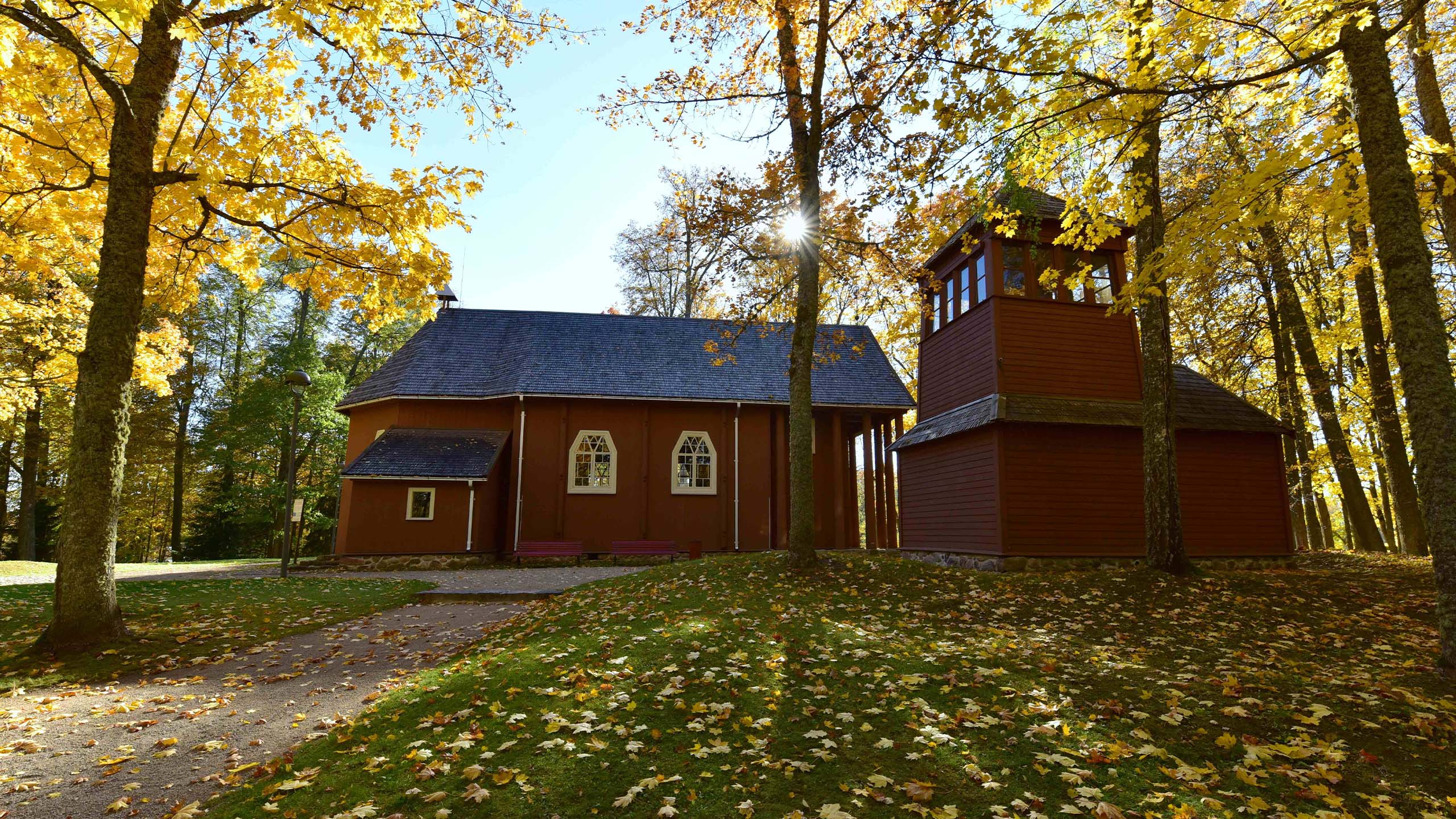
The Oldest Wooden Lithuanian Churche
Affiliate Church of the Holy Cross of Jesus Christ of Stelmužė Manor is the oldest wooden church in Lithuania, with a history dating back to the 17th century.
Beside the church stands the oldest oak tree in Lithuania, whose age is believed to reach up to 2,000 years.
The main treasures of the wooden church are its altar and pulpit, richly decorated with wood carvings, including sculptures of angels and apostles. Remarkably, no nails were used in the construction of the church – the hewn logs were joined using only an axe.
More information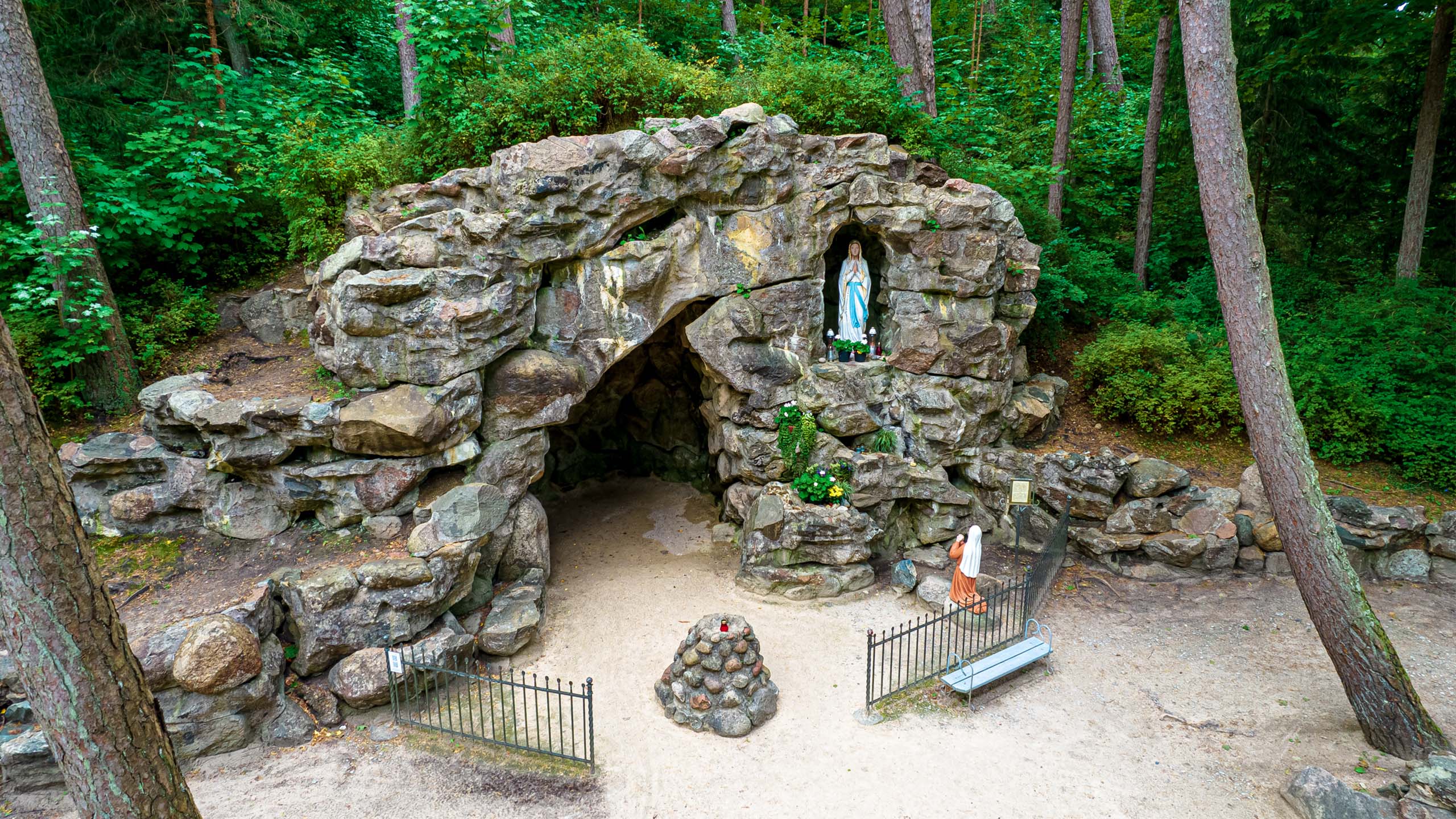
Lourdes Grottoes
There are more than 50 Lourdes grottoes in Lithuania – symbols of devotion to the apparitions of the Virgin Mary that spread from France across the world in the 19th century.
The greatest number of these grottoes can be found in the regions of Samogitia and Suvalkija.
The first Lourdes grotto in Lithuania was built in 1898 in Palanga, in Birutė Park – one of the most beautiful parks in Northern Europe. Created from natural stones with a statue of the Virgin Mary standing in a niche, the grotto was established on the initiative of the resort’s founders, the Counts Tiškevičius.
Among the most famous are the Lourdes grottoes of Kretinga, Plungė, and Šiluva, which attract pilgrims and visitors from across the country.
More informationSeasonal Celebrations and Authentic Traditions
Celebrations such as Christmas Eve and Easter in Lithuania still preserve elements of the ancient Baltic pagan worldview. Throughout the cycle of the year, unique traditions are faithfully maintained across the country, including the ritual twelve-dish Christmas Eve dinner, baking bread for the souls of those who passed away, and decorating Easter eggs with Baltic symbols. These are not only important religious holidays, but also authentic traditions preserved for centuries, born from the blending of the ancient Baltic faith with Christianity.
Kūčios (Christmas Eve)
On Christmas Eve, the streets of Lithuanian towns and cities empty as families gather for the Kūčios dinner, a ritual filled with archaic customs preserved to this day.
The table must have 12 dishes, symbolizing either the twelve apostles or the twelve months of the year. These include something from the forest (mushrooms, nuts, honey, cranberry drink), something from the lake (fish dishes, always including herring), and something from the fields and garden (rye bread, beans, peas, stewed cabbage, beetroot salad, apples, poppy seed milk). Dairy and meat products are traditionally avoided.
The family sits down when the first star appears in the sky. They share white Christmas wafer called kalėdaitis, while the eldest family member reads a prayer. Hay is spread under the tablecloth to symbolize the manger in Bethlehem, where Jesus was born. One of the traditional dishes is the Christmas breads (kūčiukai) – tiny pastries made with poppy seeds. After dinner, plates are left on the table for the spirits of those who passed away.
This evening is also a time for fortune-telling and games: drawing straws from under the table (the longest one indicates a long life), dripping candle wax into water to interpret its shapes, and other playful traditions.
This ritual dinner is unique to only a few European countries and has been included on UNESCO’s Representative List of the Intangible Cultural Heritage of Humanity.
After the Christmas Eve dinner, the faithful attend night Mass, known as the Shepherds’ Mass, commemorating the shepherds who first honored the newborn Jesus.
Easter
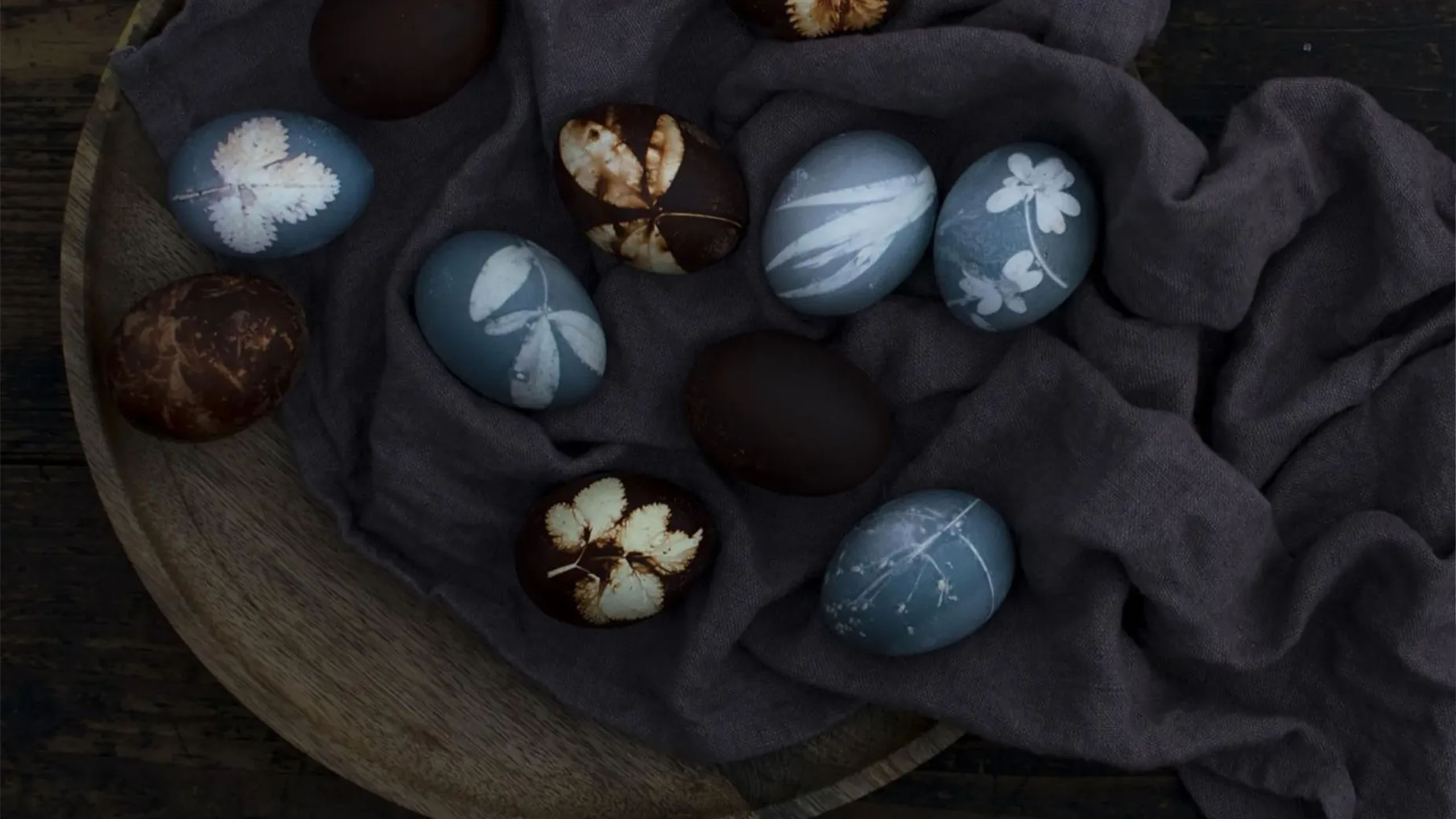
The egg is a symbol of life. Lithuania is one of the few European countries that has preserved the tradition of coloring Easter eggs with natural plant dyes, carving them, or decorating them with wax.
Sun motifs, snakes, the tree of life, and fire symbols on Easter eggs reflect how people once understood the structure of the universe, the origin of life, and the cycles of nature. The tradition of rolling eggs at Easter is connected with the desire to awaken the earth from its winter slumber.
Some families still follow the custom of dividing the first egg among all family members and eating it together. It was also common to swing on Easter Day for a good harvest, to sprinkle water around the house, or to sing and walk through the home blessing it.
One week before Easter, Palm Sunday (Verba Sunday) is celebrated. In the morning, family members lightly tap each other with palm branches – usually juniper twigs – saying, “I do not beat, the branch beats,” to wish health and prosperity. People also create compositions from dried flowers and herbs, true works of art, which are brought to church for blessing.
On Easter morning, children receive gifts from the mysterious Easter Granny.
Assumption of the Blessed Virgin Mary (Žolinė)
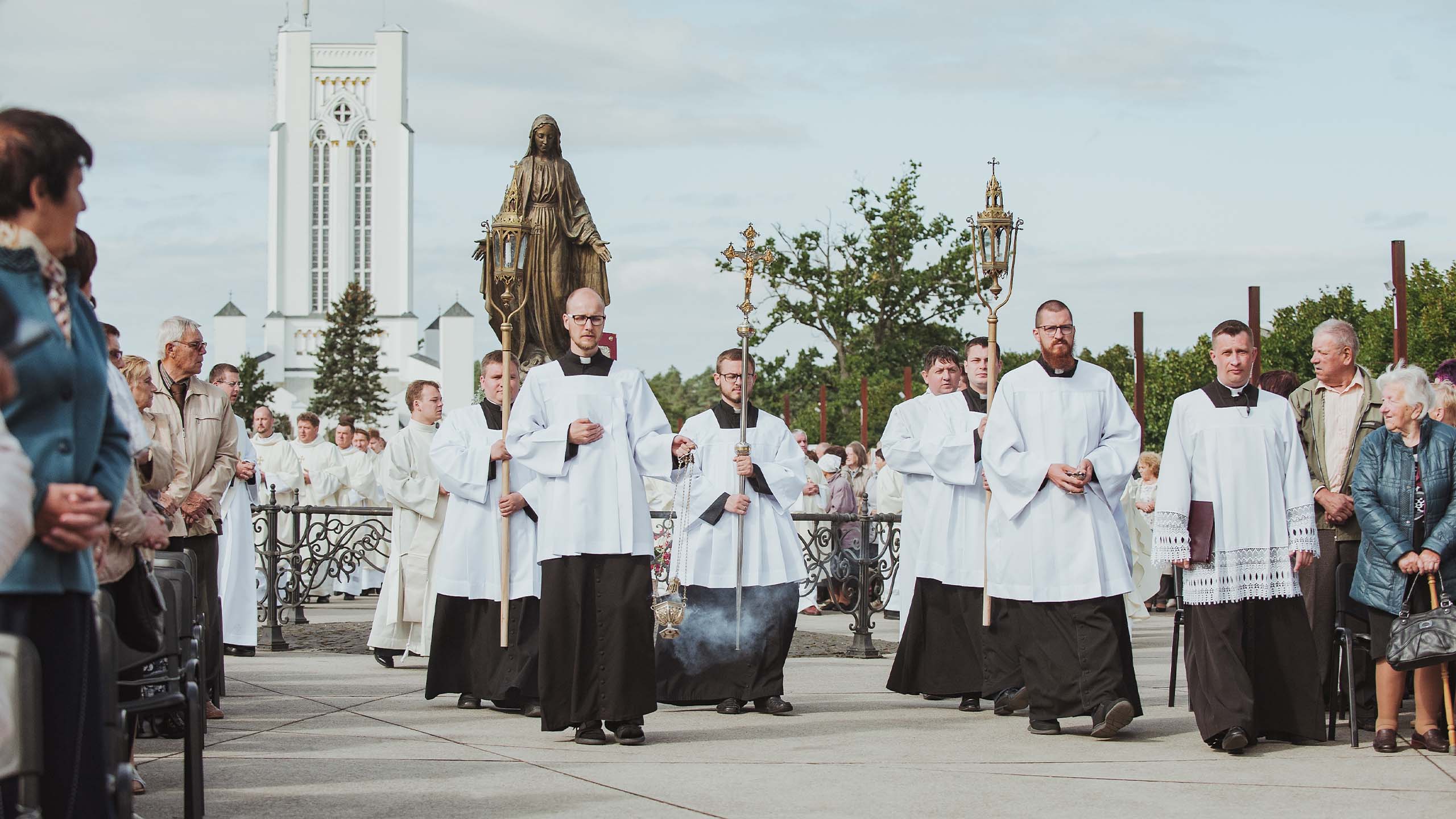
Every year on August 15, Žolinė, or the Feast of the Assumption of the Blessed Virgin Mary, is celebrated as a public holiday in Lithuania. Ceremonial masses are held in churches, and plants and herbs are blessed.
Although now a Catholic feast, in ancient times Lithuanians celebrated the end of the main agricultural season and the transition from summer to autumn, giving thanks to the earth for its harvest and honoring the goddess Žemyna, protector of the land and fertility. This festival reflects the deep connection between humans and nature.
The largest Žolinė celebrations take place in Pivašiūnai and Krekenava, lasting several days and drawing large crowds of the faithful. During the festivities, processions are held, markets are organized, and churches throughout the country are decorated with herbs and plants.
Vėlinės (All Souls Day)
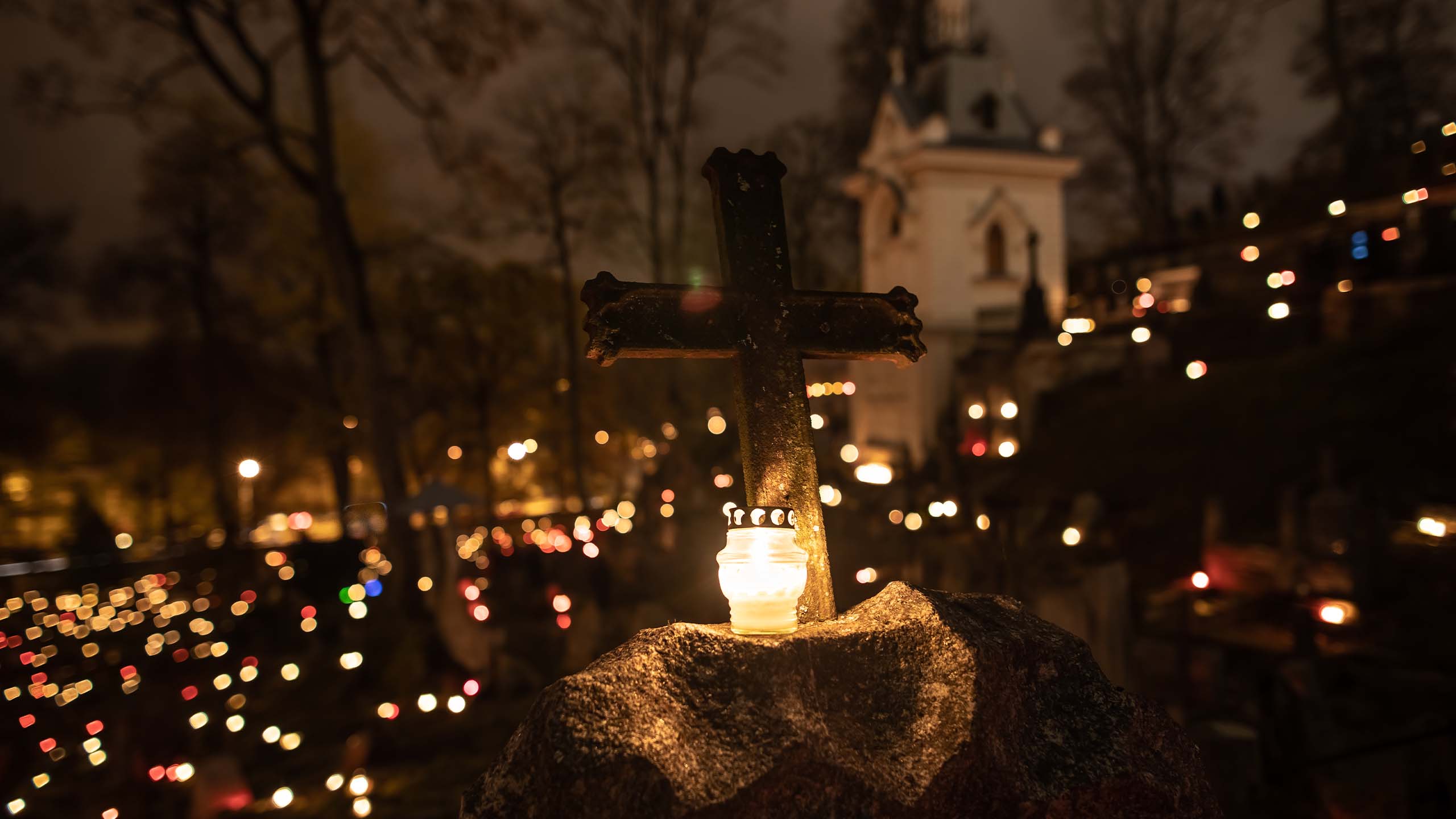
This day is a special event in the Lithuanian calendar, dedicated to tending graves, lighting candles in cemeteries, and reminiscing about the dearly departed.
November 1st is All Souls Day, which is traditionally believed to be the day when the souls of the dearly departed visit the earth. To commemorate and celebrate this mystical event, graves are tended to and small candles and tealights lit upon them. Cemeteries up and down the country shimmer and glisten in the darkness from these thousands of tiny lights.